
Integrate mRounds with SAP
The SAP integration enables bidirectional data flow between SAP and mRounds. You synchronize location and asset master data from SAP into mRounds, ensuring that your maintenance rounds reflect the current state of your plant infrastructure.
When technicians identify issues or anomalies during rounds, mRounds automatically creates SAP Notifications in your ERP system, triggering your established maintenance workflows.
Configuration is managed through the Integrations Manager interface where you establish a secure server connection and configure individual integration points with endpoint paths and field mapping for master data synchronization and ERP notification creation.
Create a SAP Server Connection
The SAP Server connection establishes secure communication between mRounds and your SAP system. This connection uses your chosen authorization method to authenticate requests and serves as the foundation for all subsequent data exchanges between the two systems.
-
Open Integrations Manager.
Figure 1. Connection screen 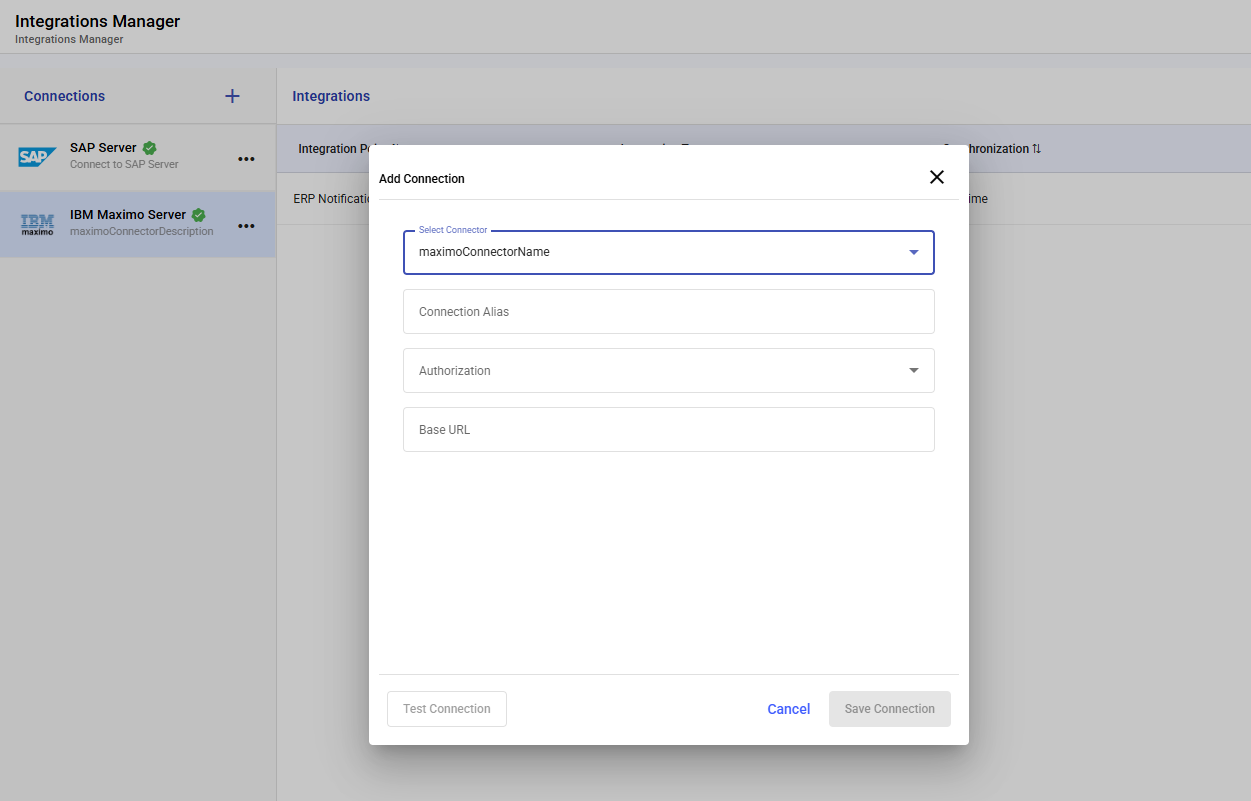
- In Connections, click +.
-
In Add Connection, do the following:
- Select Connector: SAP Server
- Connection Alias: enter a name (example: SAP - Prod)
- Authorization: select Basic, Certificate, or API Key, then complete the required fields.
- Click Test Connection.
- Click Save Connection.
Configure Inbound Integration for Master Data (Locations and Assets)
The inbound master data integration pulls location and asset information from SAP into mRounds. This synchronization ensures that technicians see current, accurate facility data when they perform maintenance rounds. Schedule these updates to run automatically at regular intervals, keeping your mRounds data aligned with your SAP master records.
To add an inbound master data integration:
- In Integrations Manager, select your SAP connection.
-
Click Add Integration (or select Master Data and click Edit).
Figure 2. Connection screen 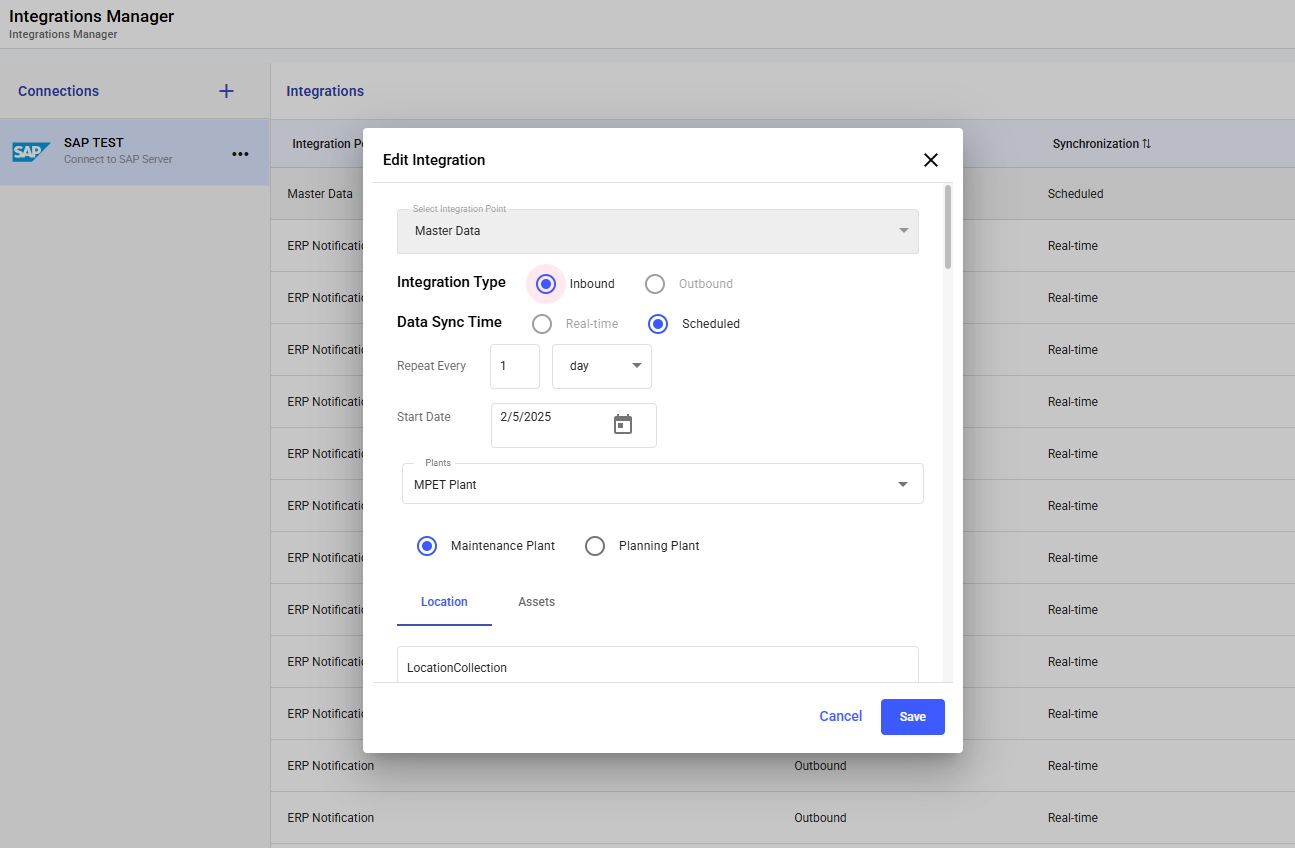
-
In the Add/Edit Integration window, do the following:
- Select Integration Point: Master Data
- Integration Type: Inbound
- Data Sync Time:
- Scheduled (recommended): set Repeat Every and Start Date
- Real-time (optional): use only if validated
- Plants: select the relevant plant.
- Select Maintenance Plant or Planning Plant (as applicable).
- Configure endpoints:
- Location tab: enter the SAP location collection/path.
- Assets tab: enter the SAP asset collection/path.
- Configure Column Configuration/Data Mapping to map SAP fields to mRounds fields.
- Click Save.
Result: Locations and Assets are synchronized into mRounds according to your schedule.
Configure Outbound Integration for ERP Notification (Create SAP Notifications)
The outbound ERP notification integration sends issue and anomaly data from mRounds to SAP, automatically creating SAP Notifications when technicians report problems during their rounds. This real-time integration ensures that maintenance issues trigger your established work order processes in SAP without manual data entry, reducing response times and improving operational efficiency.
To add an outbound ERP notification integration:
- In Integrations Manager, select your SAP connection.
-
Click Add Integration (or select an existing ERP Notification and click Edit).
Figure 3. Connection screen 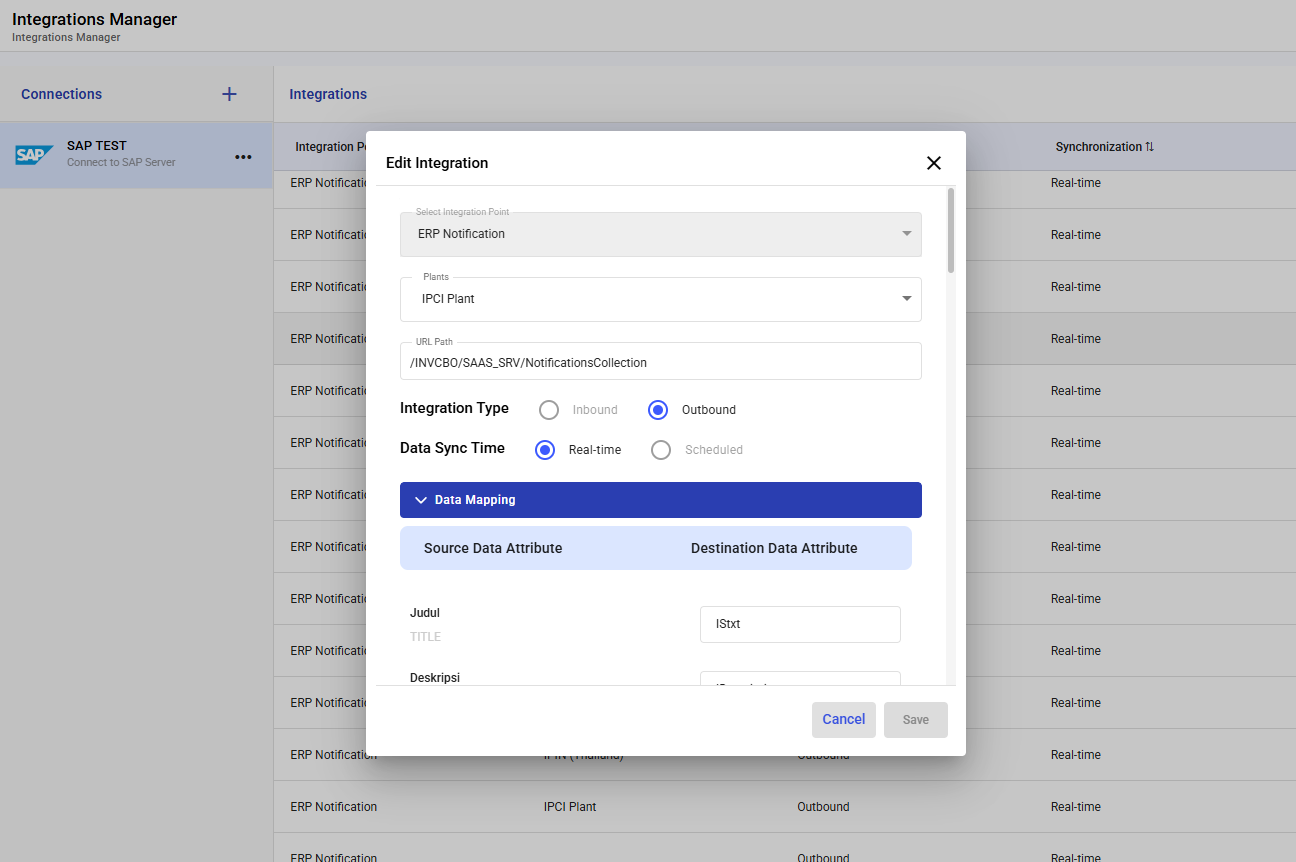
-
In the Add/Edit Integration window, do the following:
- Select Integration Point: ERP Notification
- Plants: select the relevant plant.
- URL Path: enter the SAP notifications endpoint path (example: /INVCBO/SAAS_SRV/NotificationsCollection).
- Integration Type: Outbound
- Data Sync Time: select Real-time (recommended) or Scheduled (if batching is required).
- Expand Data Mapping and map Source Data Attribute → Destination Data Attribute (mRounds → SAP Notification fields).
- Click Save.
Result: When an issue/ERP notification is created in mRounds (per your configured workflow), an SAP Notification is created in SAP with the mapped values.